West Coast Supply Chain Feels Strain as China Shipments Dry Up
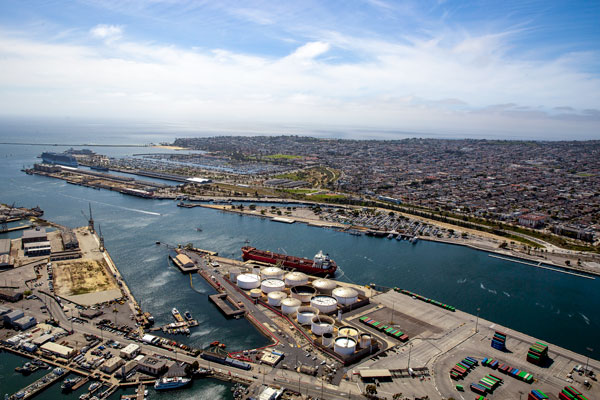
Ports along the U.S. West Coast are preparing for a significant fall in imports over the next
several weeks as shipping lines cancel sailings and send underloaded vessels from China.
The impact will be most severe at the ports of Los Angeles and Long Beach, the country’s
busiest gateway, where import volumes in May are expected to fall 35% and 38%, respectively,
from typical levels.
Between May 1 and June 30, 59 sailings to the LA-Long Beach port complex have already been
canceled — and more could follow — resulting in a weekly shortfall of 65,000 to 71,000 twenty-
foot equivalent units (TEUs).
The Port of Los Angeles expects 17 blank sailings in May and 12 in June. Long Beach
anticipates 13 in May and 17 in June, said COO Noel Hacegaba in a Journal of Commerce
report.
The impact will vary by terminal, depending on which carriers call there and where their cargo
originates. “We’re all experiencing it to some degree,” said Alan McCorkle, CEO of Yusen
Terminals in Los Angeles. His terminal expects a few cancellations in May and plans to close
some gates weekly to reduce operating costs.
Dockworkers won’t see pay cuts due to union protections, but the International Longshore and
Warehouse Union (ILWU) sharply criticized the Trump administration for its tariffs and trade war
with China.
“Tariffs are taxes,” the ILWU said in a statement. “These reckless policies are devastating
American workers, hurting key sectors, and enriching the wealthy at the expense of working
families.” The union warned of potential job losses across the supply chain if trade between the
U.S. and China remains constricted.
However, recently, the two countries agreed to reduce reciprocal tariffs for the next 90 days,
which offers some relief to the global supply chain. U.S. tariffs on many Chinese imports will fall
from 145% to 30%, while China’s tariffs on U.S. goods will drop from 125% to 10%.
Meanwhile, the slowdown isn’t limited to Southern California. The Port of Oakland expects fewer
vessel calls and lower import volumes through June, with 39 blank sailings announced across
major shipping alliances.
In Seattle and Tacoma, the Northwest Seaport Alliance (NWSA) expects 17 canceled sailings in
May and June — five more than in the same period last year. While the NWSA had posted a
22.4% year-over-year jump in imports through March, officials say that trend is reversing.
“We’re seeing lighter vessels and hearing directly from shippers about canceled orders,
especially from China,” an NWSA spokesperson said. “These impacts are real and will likely
show in our upcoming data.” China accounts for more than half of the alliance’s imports.
Meanwhile, the Port of Vancouver in Canada expects no decline in volumes, as most of its
container traffic is tied to Canadian trade.