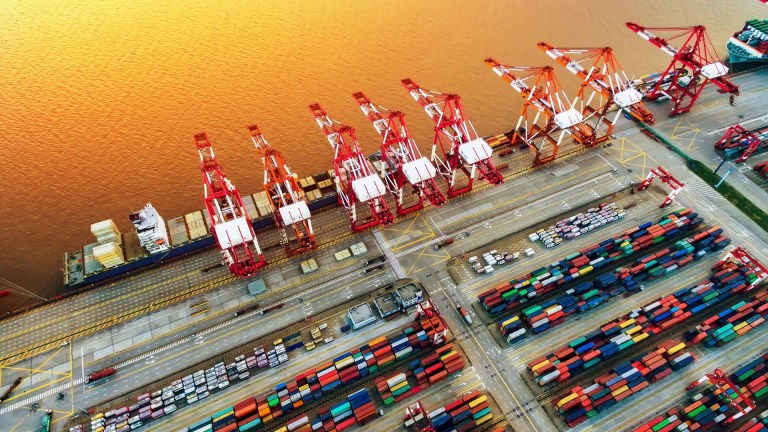
Los Angeles Port Posts Busiest Three-Month Stretch on Record

The Port of Los Angeles handled 955,907 TEUs in August, capping the busiest three-month stretch in the port’s history as strong consumer demand and early holiday shipments supported cargo volumes.
More than 2.9 million TEUs moved through the port from June through August, setting a record for any consecutive three-month period.
“We’ve put together an exceptionally strong summer in Los Angeles,” Port Executive Director Gene Seroka said, pointing to resilient consumer demand, early holiday shipments and a diverse cargo mix.
August volume was about even with last year but 6% above the port’s five-year average for the month.
Loaded imports reached 500,302 TEUs, roughly flat year over year and 7% above the five-year August average. Loaded exports fell 9% from a year earlier to 115,561 TEUs, while empty containers increased 4% to 340,044 TEUs.
Through the first eight months of 2026, the port handled just over 7 million TEUs, up 1.5% from the same period last year and 5% above its five-year pace.
Retailers also moved much of their holiday merchandise into the U.S. earlier this year amid uncertainty over tariffs, fuel prices and supply chain disruptions, according to Brian Dodge, president and CEO of the Retail Industry Leaders Association. More shipments are expected as retailers replenish inventories.
Seroka said the speed of moving cargo through Los Angeles and onto rail can also make the port competitive for importers serving markets across the country, even when trans-Pacific freight rates favor East Coast routes.
“September is shaping up to be another strong month,” Seroka said, as the port prepares for continued cargo demand through the rest of the year.