Asia Port Congestion Worsens as Weather, Tariff Rush Disrupt Shipping
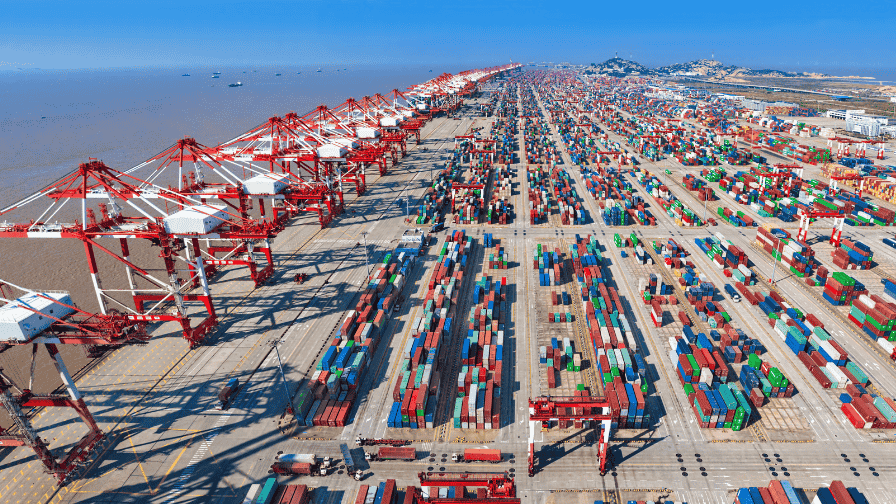
Asia’s major container ports are grappling with worsening congestion as bad weather, vessel
bunching, and a surge in cargo volumes force ocean carriers to skip port calls and adjust sailing
schedules.
The bottlenecks are being fueled by shippers frontloading cargo ahead of new U.S. tariffs
expected later this month, leading to longer vessel dwell times and increased pressure on key
ports, including Shanghai, Ningbo, Yantian, Singapore, Busan, Colombo, and India’s Nhava
Sheva.
According to Linerlytica, global port congestion has climbed to a four-year high, with nearly 11%
of the world’s container fleet, which is equivalent to 3.7 million TEUs, waiting at anchorage as of
June 28. The combination of congestion, strong cargo demand, and limited vessel deliveries
has also pushed freight and charter rates higher, with the Shanghai Containerized Freight Index
surpassing 3,200 points.
Shanghai remains the region’s most congested port, where vessels are waiting up to five days
for a berth. Fog-related closures at the Yangshan and Waigaoqiao terminals on June 19
compounded delays, while Hapag-Lloyd reported average waiting times of about 60 hours for
Gemini services and up to 120 hours for non-Gemini services.
The carrier and partner Ocean Network Express (ONE) have already omitted Shanghai from
several services, while additional sailings have skipped Ningbo due to weather and high yard
utilization.
Congestion has also intensified at major transshipment hubs. In Singapore, berth waits have
stretched to as much as 12 days on some ONE intra-Asia services, while delays have extended
voyage times by several days despite carriers omitting ports to recover schedules. Ports in
Jakarta, Surabaya, Busan, and Colombo are also experiencing delays ranging from two days to
more than a week.
To minimize disruptions, carriers including Hapag-Lloyd and CMA CGM are rolling cargo to later
sailings, transshipping containers through alternate ports, and omitting port calls where
necessary. Industry executives, however, expect congestion across Asia to worsen further in the
coming weeks as elevated cargo volumes continue to strain port operations.